
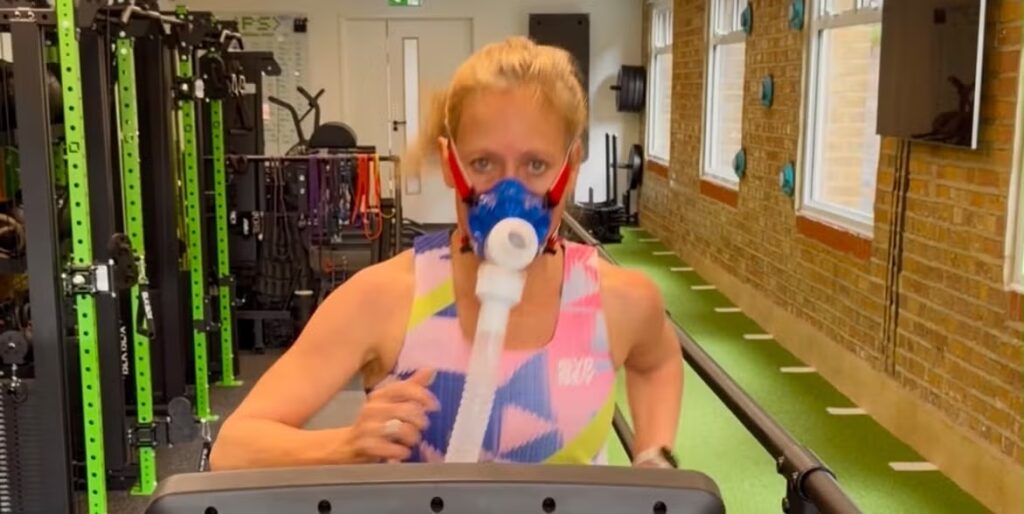
The mask fits snugly over my nose and mouth, forcing me to breathe solely through the machine connected by a large white tube. The sensation is strange and somewhat stifling. I walk, jog, and then run, increasing the speed every minute. My goal is to endure for as long as possible. This is a VO2 max test, a routine I completed once before 15 years ago at the age of 43. Now, after many years and numerous marathons, I am eager to find out how my VO2 max score has changed.
Understanding VO2 Max
Mark Roberts is guiding me through the process at his gym, Personal Space, located in Kingston-upon-Thames. He explains, ‘This test assesses how efficiently your body utilizes oxygen through your heart and lungs, and how that oxygen is converted to energy for your muscles.’ He continues, ‘Starting around the age of 30, your VO2 max will typically decline due to a decrease in heart efficiency. Additionally, without regular exercise, muscle mass can diminish, which also impacts VO2 max. To maintain a healthy lifestyle as you age, focusing on VO2 max and muscle mass is crucial.’
Test Results and Implications
To my astonishment, and Mark’s, my VO2 max score remains unchanged at 51. ‘The average score for a 58-year-old woman is 30. You’ve maintained a high score thanks to consistent cardiovascular training over the years, as well as heavy weight training recently,’ he adds. I feel a sense of pride, yet I remain puzzled about the practical implications of my VO2 max score as a runner. When I share my thoughts on Instagram, responses range from it being a bragging point to a fitness benchmark, with few expressing clarity on its utility for training purposes.
Expert Insights
I turn to my coach for further insight. ‘It serves as a general indicator of fitness and how effectively you process oxygen,’ Jo Wilkinson explains. ‘Moreover, the test reveals your aerobic and anaerobic thresholds, which are particularly valuable for your marathon training.’ In essence, she notes, this information helps determine the appropriate pace for long runs and intensive interval sessions. As Jo delves deeper into the science, I find myself somewhat overwhelmed. I inquire whether it’s worth the expense for the average person. She responds, ‘For elite runners and those at the peak of their game, it is indeed worthwhile. The data is quite beneficial for them. However, for most people, understanding thresholds can be effectively gauged through 5K or 10K races.’
Final Thoughts
Once the test concludes, Mark provides me with a sheet filled with graphs and statistics. Sitting there, fatigued, I process the information. Unexpectedly, I glance at my Garmin watch, discovering that it has displayed a VO2 max score of 51 for months. Is this a coincidence? I’m not sure yet, but that has been my target to monitor all along.
Interested in maintaining fitness as you age? Club members can access a collection of over 100 coach-created training plans, including half marathon strategies tailored for various time goals and skill levels. Join the Club starting from just £1 to unlock access and enjoy numerous exclusive benefits.