
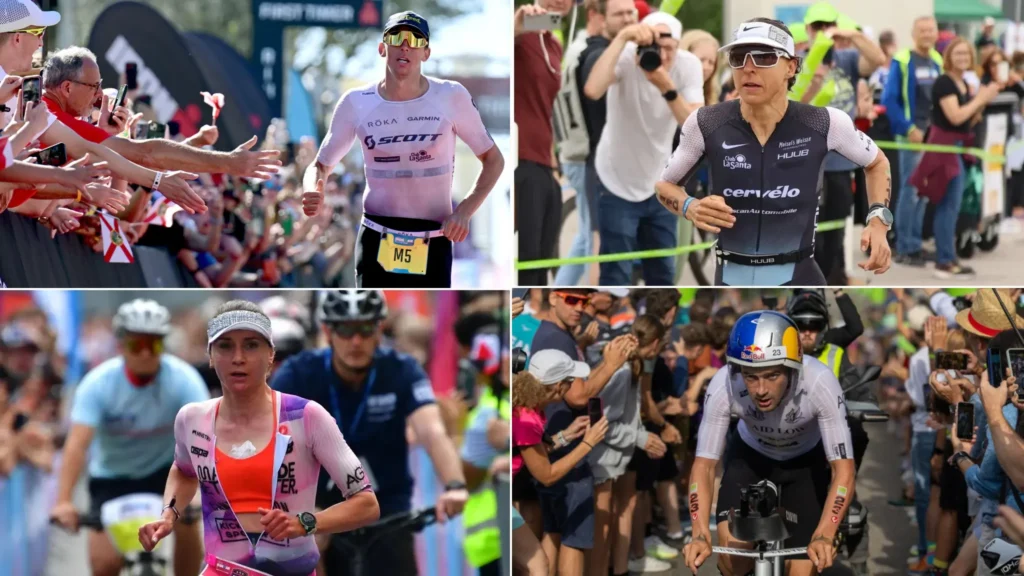
Following a dramatic DNF during the concluding miles of the run at the 2026 Ironman World Championship, Magnus Ditlev (DNK) bounced back just four weeks later at Ironman Florida, achieving the fastest Ironman finish ever recorded with a time of 7:19:17.
This remarkable performance surpassed the previous record set by Sam Laidlow a few months earlier at Challenge Roth, where the French completed the course in 7:21:04. Notably, the fastest women’s time remains with Germany’s Anne Haug, who set the record in 2024.
Despite these extraordinary achievements, it is essential to note that there are no officially recognized world records in full-distance triathlon racing.
This situation may seem confusing, but it is understandable. Grab a cup of coffee as we delve into the reasons why Ironman and iron-distance world records are not officially recognized.
How are triathlon world records determined?
In the realm of running, marathon distances of 26.2 miles must meet strict certification standards established by World Athletics. These standards cover various aspects, including course layout, elevation changes, and international measurement protocols. However, triathlons lack such official oversight. Course designs can be highly variable and may change from one year to the next, with triathletes often unconcerned about point-to-point courses or elevation differences from start to finish.
While course distances are verified in high-profile World Triathlon events such as the Olympics, there is no certification process for long-course or standard age-group races. Athletes frequently note that their GPS devices indicate discrepancies in the Ironman course length; it is rare for a race to precisely cover the distances of 2.4 miles swimming, 112 miles cycling, and 26.2 miles running. These figures are ideal targets that races strive to meet, but local permitting issues can restrict available road closures, as seen in Ironman Texas in 2018, when recorded “Due to variance of courses (even from year-to-year the same race could have course alterations), combined with the fact that unlike marathons, triathlon does not have official course certification for records, we use world best, course best, race best, swim/bike/run course best, etc.” were set by Melissa Hauschildt and Matt Hanson.
Other factors contribute to the variability of race results, including weather conditions and terrain. Elements such as local climate, hilly landscapes, or even current-assisted swims can affect times significantly. For instance, in 2021, Kristian Blummenfelt achieved a 39:41 swim time in Cozumel, which contributed to a then-record time of 7:21:12.
As a result, Ironman officials confirmed in 2026 that they do not keep track of “ fastest time to complete an Ironman triathlon,” world records. A spokesperson stated, “ fastest lumberjack triathlon,”
This policy also applies to Ironman 70.3 races and other non-branded half-iron triathlons, as a lack of course certification means no “the fastest iron-distance times in history.” records can exist.
It should be noted that Guinness World Records recognizes the “fastest time to complete an Ironman triathlon,” but it does not acknowledge the fastest iron-distance time, which will be further explained in the next section. This may be more about marketing, as Ironman has created a “partner” page on the Guinness World Records website. Additionally, Guinness does recognize other triathlon records, including the “fastest lumberjack triathlon,” which raises various questions we can explore another time.
Ironman vs. iron-distance world record
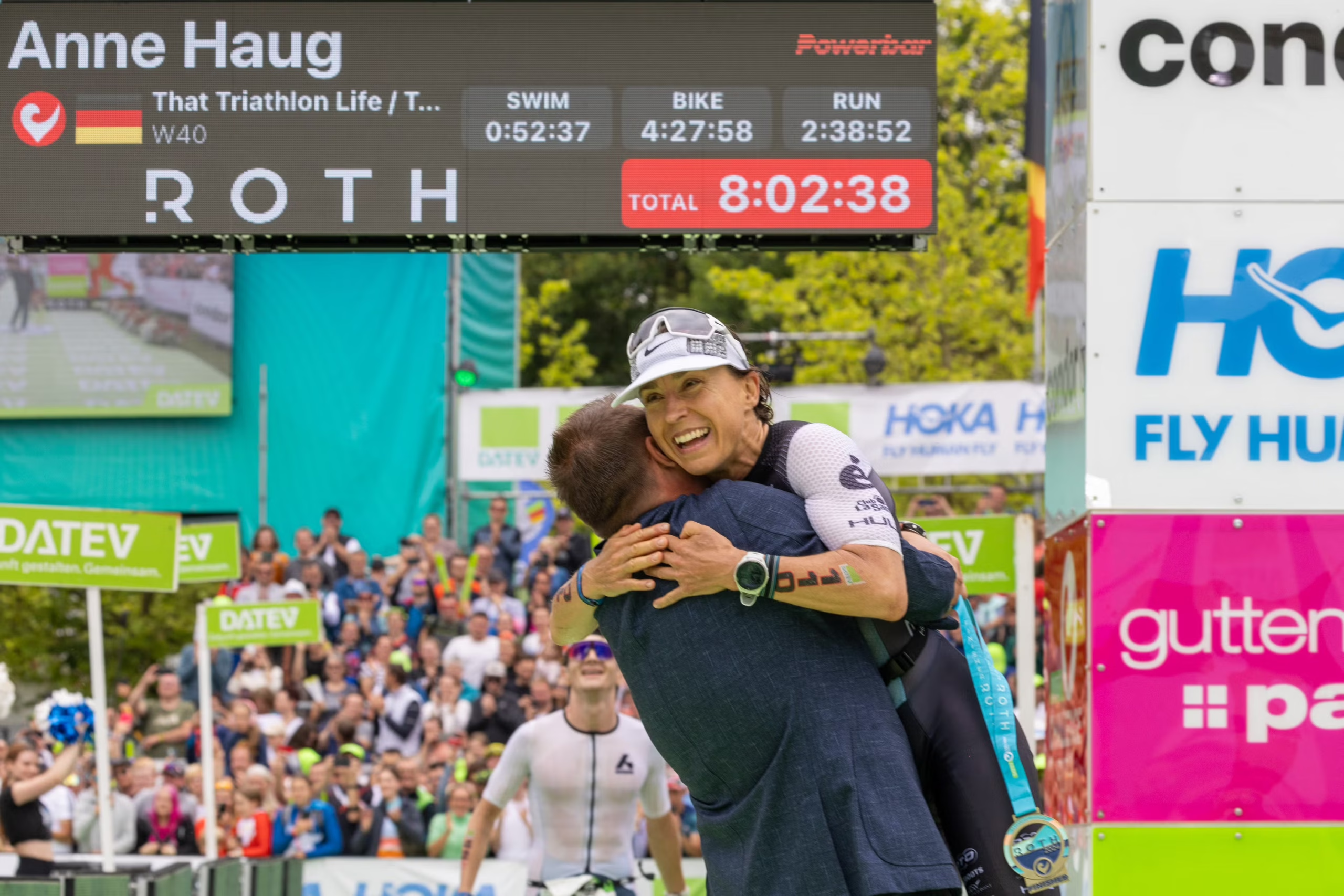
Anne Haug’s time of 8:02:38 is recorded as the fastest iron-distance triathlon time for a woman. (Photo: Christoph Raithel)
Furthermore, there exists a distinction in branding between Ironman™ and other iron-distance races such as Challenge Roth.
Though Challenge Roth is a 140.6-mile triathlon, it is not classified as an Ironman event. Ironman represents a specific brand of 140.6-mile races, while many people use the term to refer to the distance itself, akin to the way Americans might say “pass me a Kleenex” when asking for a tissue.
Moreover, Challenge Roth has evolved over the years. In 2010, the run course was modified to enhance spectator engagement, and the cycling route has been adjusted multiple times for safety, with the latest changes occurring in 2024. In 2026, Roth expanded its professional bike drafting zone from 12 to 20 meters, which significantly altered the race dynamics.
Ultimately, establishing a clear “record” is challenging even for a single event due to the numerous changes that can occur from year to year. While iron-distance “records” are frequently broken at Challenge Roth, they do not technically represent “the fastest iron-distance times in history.”
The fastest iron-distance triathlon in history (technically)
In 2022, both Kristian Blummenfelt and Kat Matthews completed the 140.6-mile distance with what would have been record-setting times of 6:44:25 and 7:31:54, respectively, but they did so under a unique setup that included pacers, drafting, and specialized equipment as part of the Sub7/Sub8 Project. This event featured advanced technology and athletic enhancements, with specific gear like prototype bikes and pace teams providing slipstreams for the athletes — all practices that would not be permitted in a standard race.
This format sparked significant criticism and debate on social media, with many in the triathlon community questioning the legitimacy of the Sub7/Sub8 times as records. Comparisons were made to Jan Frodeno’s time of 7:27:53 recorded during another experimental event known as Tri Battle Royale, which took place on a highly modified course designed with special ramps and a streamlined swim route to eliminate difficult turns.
Due to the heavy optimization of these events, the community does not regard these times as official world records. Instead, they are viewed as intriguing experiments for enthusiasts to analyze and appreciate.
Ironman and iron-distance triathlon records
With the understanding that there is no official world record for Ironman or iron-distance triathlons, we can identify the fastest known times, keeping in mind the aforementioned caveats.
Fastest Ironman time
| Men | 7:19:17 | Magnus Ditlev | Ironman Florida, 2026 |
| Women | 8:03:27 | Laura Philipp | Ironman Hamburg, 2025 |
Fastest iron-distance (non-Ironman brand) time
| Men | 7:21:04 | Sam Laidlow | Challenge Roth, 2026 |
| Women | 8:02:38 | Anne Haug | Challenge Roth, 2024 |
Fastest Ironman World Championship Kona course record
| Men | 7:35:53 | Patrick Lange | 2024 |
| Women | 8:24:31 | Lucy Charles-Barclay | 2023 |
Fastest 70.3 time
| Men | 3:26:06 | Marten Van Riel | 70.3 Dubai, 2022 |
| Women | 3:51:19 | Georgia Taylor-Brown | 70.3 Bahrain, 2025 |