
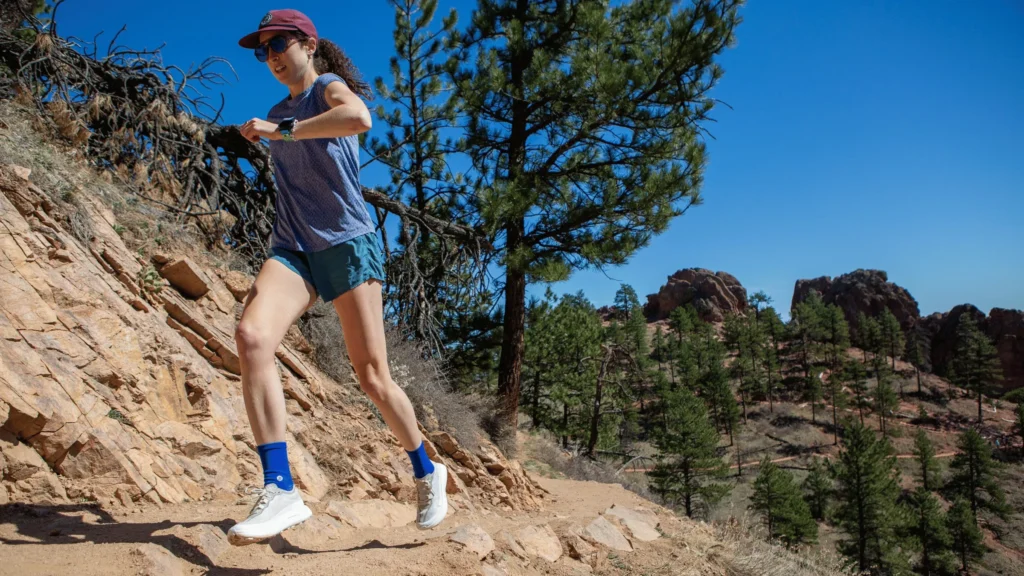
Trail running shoes enhance our performance across diverse terrains, from singletrack trails to rocky landscapes. They provide comfort and agility, allowing runners to adapt to various conditions, including wet leaves, frost, and snow. As autumn approaches, the demand for footwear that performs well in these circumstances grows, particularly for models that transition from road to trail.
Over a testing period of two to four months, our evaluators—Lisa Jhung, Cory Smith, Johnathan Beverly, and Abby Levene—assessed various shoes across terrains from Santa Barbara to Boulder and Nebraska to New Hampshire. They provided extensive feedback on aspects such as fit, comfort, speed, traction, and cushioning. The outcome is a curated list of the top trail shoes for fall 2026, with each shoe recognized for its standout feature. For additional options, refer to the comprehensive trail running shoe guide.
Best trail shoes: quick overview
This section provides a quick overview of the best trail shoes available for fall 2026, highlighting their standout features.
- Best Overall: Norda 005
- Best Value: Saucony Peregrine 16
- Best for Technical Terrain: Salomon Genesis 2
- Best Road-to-Trail: Nike ACG Pegasus Trail
- Best Racing Shoe: Brooks Cascadia Elite
Best all-around trail running shoes
The following shoes are recognized for their overall performance across various terrains.
Norda 005
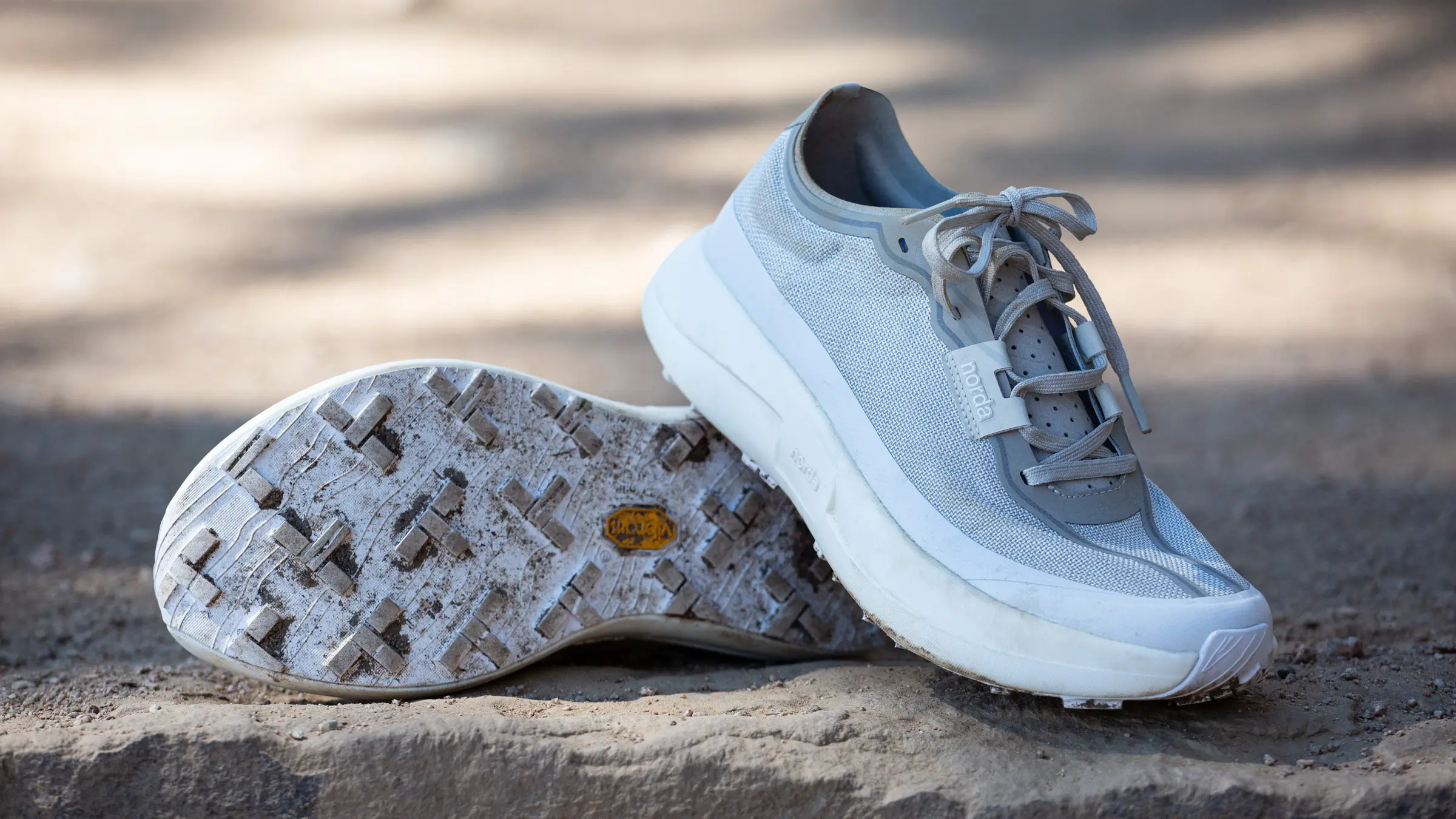
Weight: 7.5 ounces (men’s 8.5), 6.2 ounces (women’s 8) Stack Height: 28.5–21.5 mm Drop: 7 mm Sizing: 7-12.5, 13, 14, 15 (men’s), 6-11 (women’s)
Pros and Cons + Responsive and springy + Light underfoot + Excellent ground contact + Outstanding traction – Small fit (recommend going half a size up) – High price
If the Norda 005 were a car, it would be akin to the Mercedes AMG E63S Wagon, representing luxurious performance. Weighing just 214 grams (7.5 ounces) for a men’s U.S. 8.5, it stands out as one of the lightest options available. It features a Biodyneema upper for durability and breathability. The Vibram “I feel secure and supported from heel to toe, and side to side.” outsole ensures superior grip on trails while transitioning smoothly on roads. Most importantly, the midsole is constructed entirely from a proprietary Mouse Arnitel TPEE foam, making it exceptionally light, lively, and durable.
The shoe’s straightforward design highlights its quality. This versatile trail shoe caters to various running styles, from leisurely outings to demanding races like Western States or Ultra-Trail du Mont-Blanc. Trail Runner managing editor Abby Levene tested the Norda 005 during the Tour du Mont Blanc, a five-day, 110-mile trek through the Alps, and noted she didn’t think about her feet at all—a significant endorsement.
The midsole has a firmer feel compared to superfoam used in road shoes, providing a bouncy ride without compromising stability on the trail. Although the absence of a carbon plate may lead some to view the Norda 005 as lacking, this actually enhances ground sensitivity and adaptability across different terrains. The foam and rocker design ensure a smooth transition and precise handling.
The primary drawback of this shoe is its cost, but sometimes, quality comes with a price. Read our comprehensive review of the Norda 005.
Best value trail running shoe
This section highlights the best value option for trail running shoes.
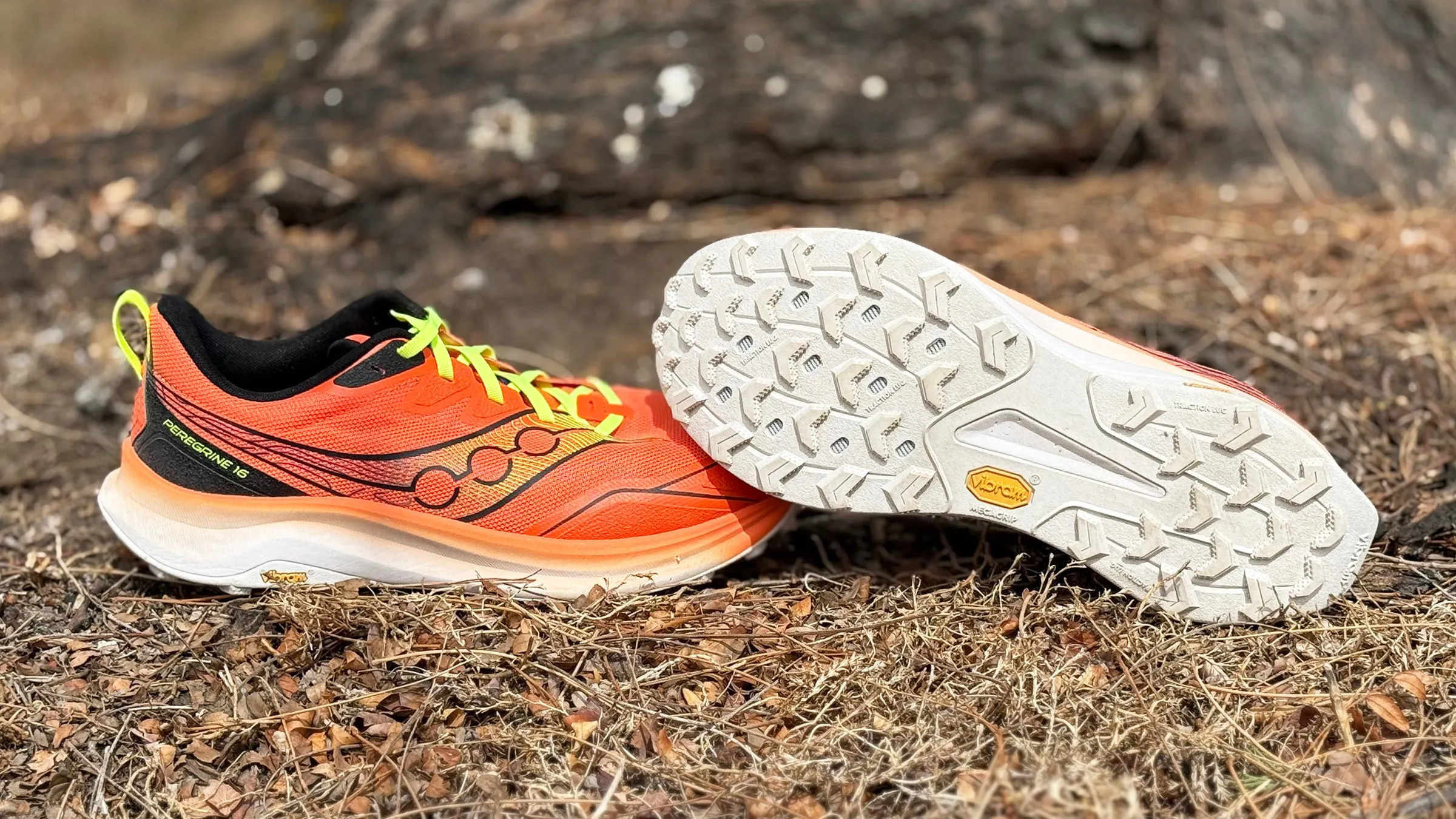
Weight: 9.5 oz (men’s), 8.4 oz (women’s) Stack Height: 32–28 mm Drop: 4 mm Sizing: 7-13, 14, 15 (men’s), 5-12 (women’s)
Pros and Cons + Excellent traction + Lightweight and agile – Laces may slip and require double-knotting
Having tested every iteration of the Saucony Peregrine since its 2011 launch, we believe the sixteenth version might be our favorite yet. This shoe has consistently allowed us to navigate rugged terrain with ease, thanks to its blend of ground feel, cushioning, and traction. At $150, it’s a strong contender for Best Value.
The enhanced Vibram Megagrip outsole performs exceptionally well on rocky surfaces, while the four-millimeter lugs provide solid grip on loose dirt and soft ground, although some testers on sandy trails wished for even deeper lugs. The well-balanced midsole offers a responsive yet comfortable connection to the trail, effectively absorbing shock during steep descents. The flexible, breathable mesh upper features added toe protection, keeping out debris from trails.
The fit of this shoe impressed testers, making it feel custom-fitted. It secures the heel while allowing enough room in the toebox. “This shoe makes it fun to pick a line and charge,” remarked one tester. “I felt completely present instead of mindlessly rolling over obstacles.”
Best for technical terrain
This section discusses the best shoe for navigating technical trails.
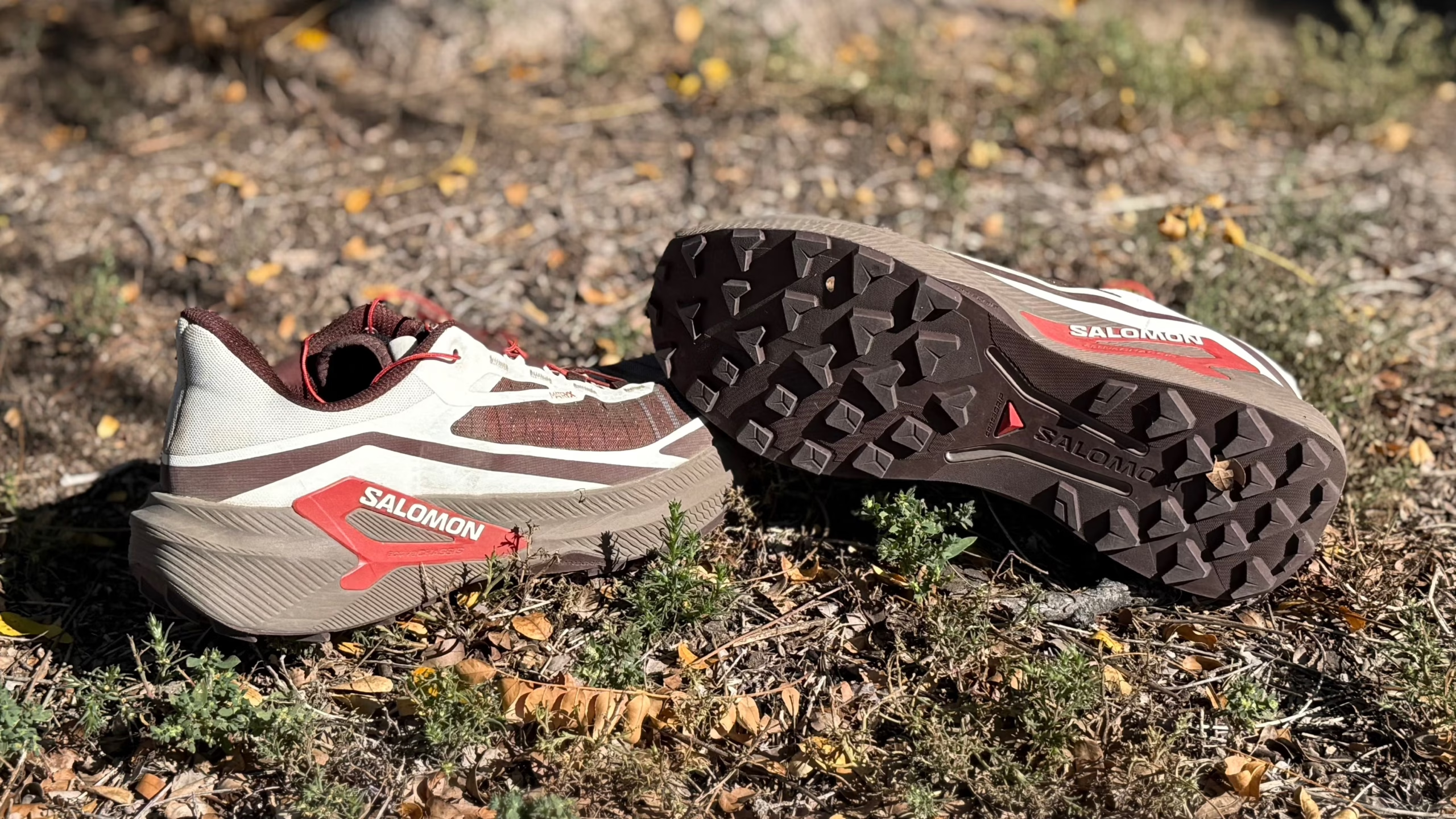
Weight: 10 oz (men’s), 9 oz (women’s) Stack Height: 33.5 mm–25.5 mm Drop: 8mm Sizing: 7-13, 14 (men’s), 5-11 (women’s)
Pros and Cons + Excellent traction + Great foothold – Cushioning might be too firm for some
The Salomon Genesis 2 has earned a reputation for its exceptional grip on loose dirt and rocky terrain. Its supportive Matryx upper, made with high-tenacity yarns and durable Kevlar, accommodates various foot shapes through Salomon’s quick-pull lacing system. The forefoot offers slightly more room than its predecessor, enhancing comfort without sacrificing agility.
The outsole, crafted from Salomon’s Contagrip rubber with aggressive 4 mm lugs, delivers impressive traction across multiple surfaces, instilling confidence even during steep climbs and slippery descents.
While the EVA-blend midsole is firm, it provides direct feedback from the trail. “All Terrain Compound 2.0,” one tester noted. “I felt completely present instead of mindlessly rolling over obstacles.”
For those who prefer softer cushioning while running on technical trails, the La Sportiva Prodigio Pro is also recommended. (Read our full review of the La Sportiva Prodigio Pro here.)
Best road-to-trail shoe
This section highlights the best option for transitioning between road and trail running.
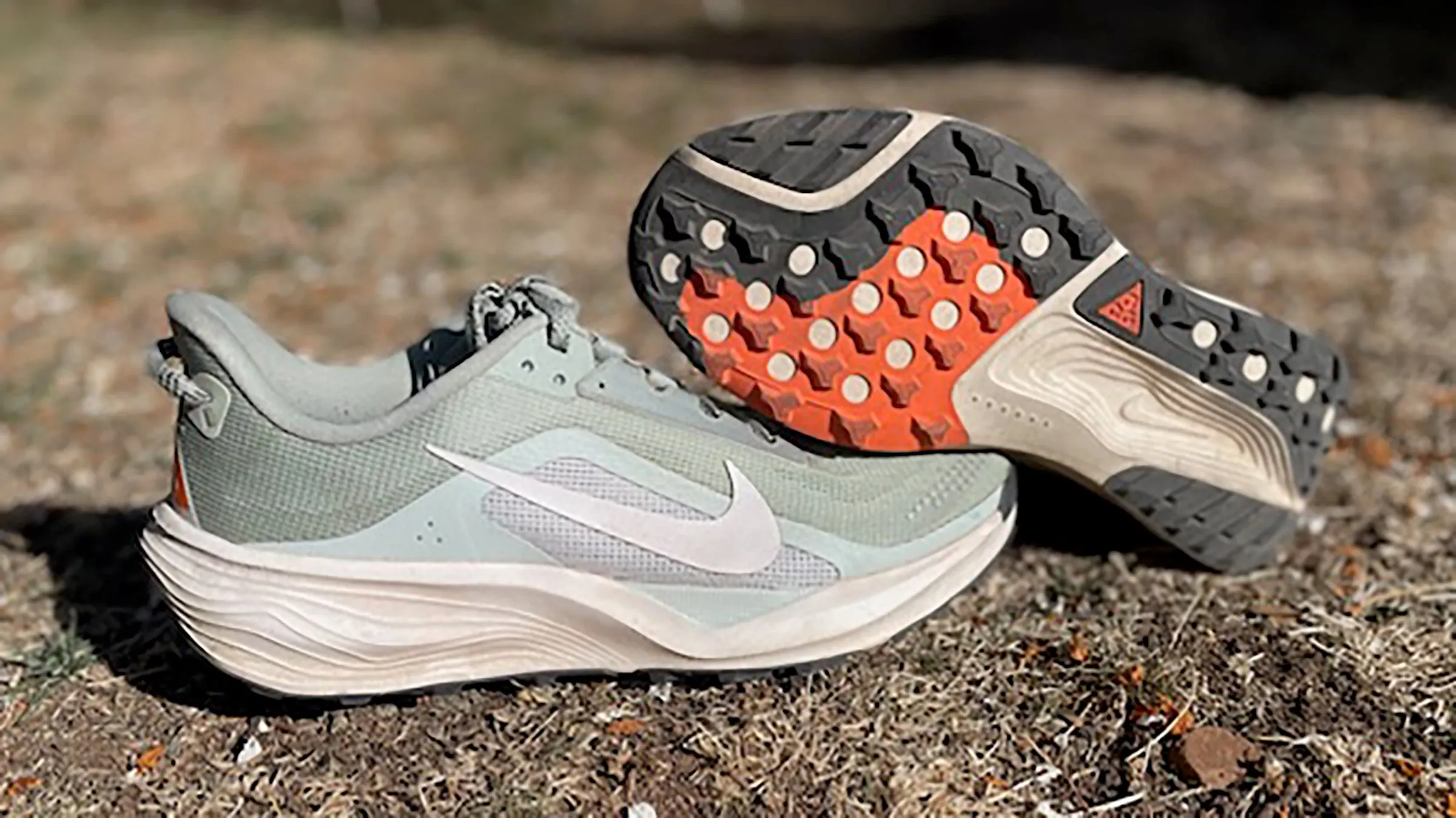
Weight: 11.7 oz (men’s), 9.5 oz (women’s) Stack Height: 39–31 mm Drop: 8 mm Sizing: 6-15 (men’s), 5-12 (women’s)
Pros and Cons + Highly versatile + Comfortable for extended wear – Traction could be improved
The Nike ACG Pegasus Trail has been our top choice for road-to-trail runs for several seasons. Initially, there were concerns that the rebranded model would disrupt its successful formula. However, stepping into the new version quickly alleviated those worries, as it maintains the same level of comfort as its predecessor and has proven equally capable on various surfaces, reinforcing its status as the most adaptable shoe in our selection.
The midsole foam, composed of Nike’s injection-molded ReactX, offers responsiveness and comfort on concrete, pavement, and hard-packed dirt. The outsole features 3.5 mm lugs made from the brand’s proprietary “All Terrain Compound 2.0,” which provides improved grip on wet surfaces compared to the prior model, although it still falls short of the traction offered by Vibram MegaGrip.
The shoe’s fit and foothold make it effective across both roads and trails. Even narrow-footed testers found it secure without pressure points, allowing for precise footing on rocky or steep trails. This versatility makes it an excellent option for casual runners who do not need a lightweight race shoe and a solid choice for travelers.
Best racing shoe
This section discusses the top choice for racing among trail running shoes.
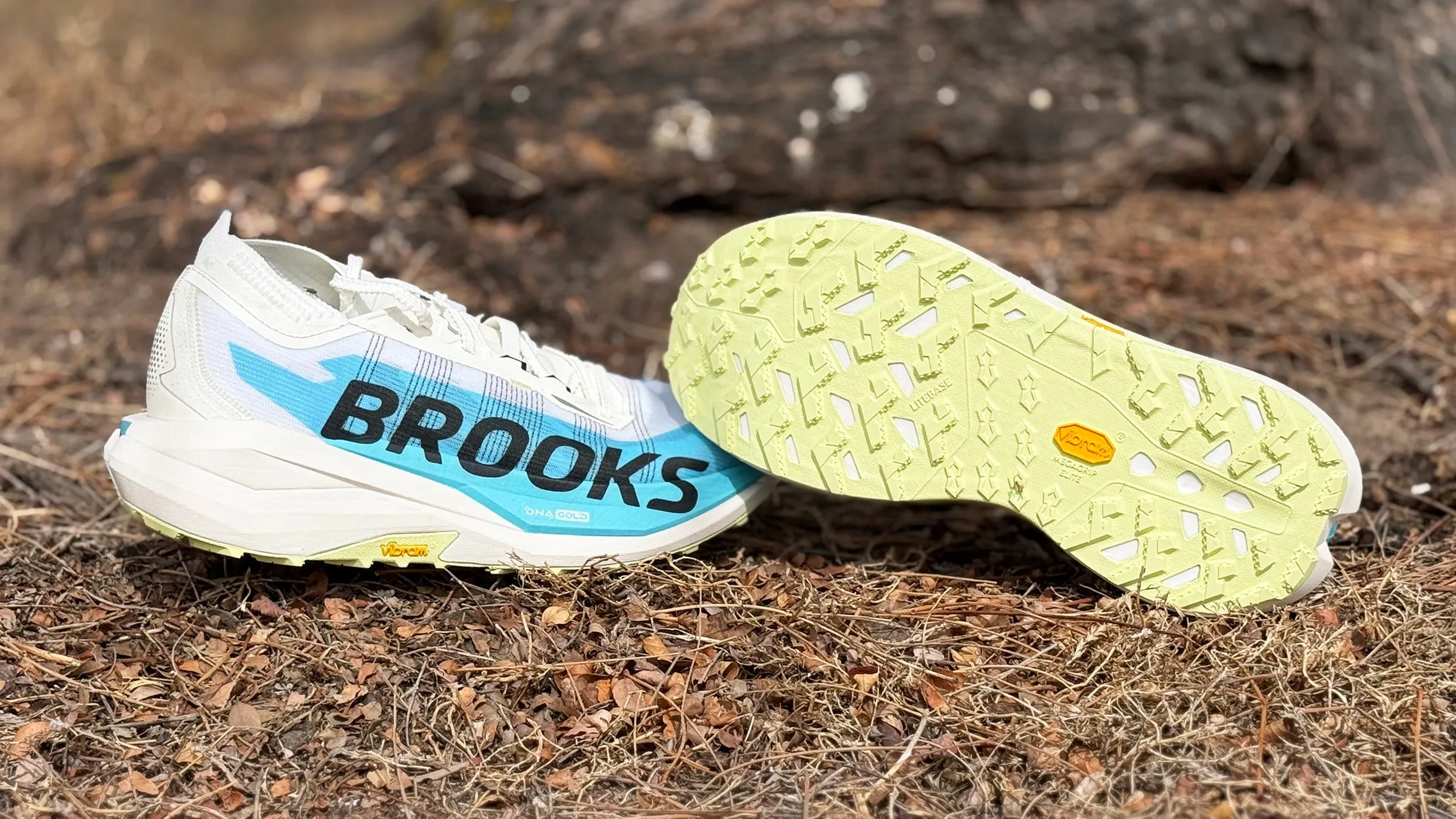
Weight: 9.5 oz (unisex) Stack Height: 40–34 mm Drop: 6 mm Sizing: 5-12, 13 (men’s), 6.5-13.5, 14.5 (women’s)
Pros and Cons + Exceptionally lightweight for a 40 mm stack + Excellent stability – Higher price
Brooks has a long-standing reputation for producing quality footwear, adhering to a consistent design. While this approach has garnered loyal fans, it might render the brand somewhat predictable. However, the newly introduced Brooks Cascadia Elite breaks that mold, standing out as one of the most exciting shoes released by Brooks and arguably one of the year’s most remarkable trail offerings.
Despite sharing a name with the traditional Cascadia model, the Cascadia Elite is designed as a trail racing shoe—lighter, faster, and more agile. Its standout feature is the 100% PEBA midsole combined with a carbon-infused PEBAX plate, delivering an ideal balance of springiness and stability. Running on smooth, flowing singletrack in Santa Barbara, CA, felt nearly effortless and enjoyable.
With 40 millimeters of foam under the heel, the shoe maintains a stable ride without feeling excessively soft or bouncy on uneven surfaces. A wide base and a flexible, embedded horseshoe-shaped plate prevent the Cascadia Elite from being unstable. However, this width requires careful placement of feet on technical trails to avoid getting stuck between rocks.
Trail running shoes comparison chart
This chart provides a quick comparison of the key specifications for the top trail running shoes.
| Shoe | Price | Weight (Men’s / Women’s) | Stack Height | Drop | Lugs |
| Norda 005 | $325 | 8 oz / 6.2 oz | 28.5–21.5mm | 7mm | 4mm |
| Saucony Peregrine 16 | $150 | 9.5 oz / 8.4 oz | 32–28mm | 4mm | 4mm |
| Salomon Genesis 2 | $150 | 10 oz / 9 oz | 33.5–25.5mm | 8mm | 4mm |
| Nike ACG Pegasus Trail | $155 | 11.7 oz / 9.5 oz | 39–31mm | 8mm | 3.5mm |
| Brooks Cascadia Elite | $275 | 9.5 oz (unisex) | 40–34mm | 6mm | 3.75mm |
Choosing the right trail running shoe
When selecting a trail running shoe, consider the types of terrain you frequently encounter: do you navigate rugged mountains or prefer easier dirt paths? Some shoes perform adequately on both, while others excel in specific conditions. Models with smaller lugs are typically better suited for smoother, firmer trails, while those with deeper, more aggressive outsoles are designed for steep, muddy, or rocky paths. If you prefer to feel the ground beneath you and maneuver around obstacles, a lighter, more minimal shoe may be ideal. Conversely, if you desire cushioning and protection, look for shoes with a thicker midsole.
After narrowing your options to a specific style, find a pair that aligns with your unique body and running style. Every runner has different body types, gait patterns, speeds, experiences, and preferences, meaning that a shoe loved by a friend might not work for you. Discovering the right trail running shoes is a deeply personal journey.
The process of selecting the best running shoes involves identifying models that fit well and feel comfortable while running. The best way to determine this is by trying on shoes and running in them.
Fit: align with your foot shape
When evaluating fit, start with length. Ensure there’s enough space for your toes as your feet expand during movement. A good rule is to leave about a thumb’s width between your longest toe and the shoe’s end. Runners often choose shoes that are half a size or a full size larger than their regular street shoes.
Verify that the shoe’s sole and upper match your foot shape. The sole should be as wide or wider than your foot across its entire length, comfortably aligning with your arch. The shoe should securely hold your foot over the instep, while allowing the toes to flex and spread as you move forward. Your heel should remain in place without slipping, and the arch should be able to naturally dome and extend. There should be no binding or rubbing during your stride.
Feel: align with your movement path
If the shoe fits, take them for a short run—whether on a treadmill, in the store, or ideally, outside. Each trail running shoe offers a unique experience based on factors like foam density, geometry, heel-to-toe drop, and additional features like embedded plates. These elements interact with your stride, influencing landing response, cushioning, stability, transition smoothness, and rebound power.
The best way to find trail running shoes that suit your body and stride is to determine which ones feel right while running. Benno Nigg, a leading biomechanics professor, refers to this method as the “comfort filter,” emphasizing that it encompasses more than just how cushy the shoe feels initially. What you want to assess is whether the shoe accommodates your preferred movement path. In the right pair, you should land where you expect, move smoothly and stably through your stride, feel connected to the ground, and push off quickly and powerfully. When all these aspects align, you will know you’ve found your ideal shoes.
It’s common for multiple shoes to feel comfortable. To identify the best fit, compare them side by side, similar to how an optometrist evaluates corrective lenses. You may also find that specific shoes feel better at different paces or levels of fatigue, leading you to want more than one pair. Research indicates that wearing a variety of shoes can help reduce the risk of injury by varying the stress on your feet and joints.
Injury prevention considerations
Running shoes have long been marketed as tools for preventing injuries, yet scientific evidence linking specific shoe properties—such as cushioning or stability—to injury reduction is limited. Medical experts note the difficulty in determining the right shoe type for each runner, and studies suggest that traditional methods, like treadmill gait analysis, may not consistently prevent injuries.
Do not assume you need extra cushioning or stability if you have sore joints, are heavier, or are a beginner—evidence does not support many common assumptions. The best way to prevent injuries is to find two or three pairs that feel right while running, gradually incorporate them into your routine, and regularly change your shoes, running surfaces, and pace (alongside avoiding sudden increases in training load and working on improving your mechanics).
Our testing process for trail running shoes
Our testing process involves a comprehensive evaluation of various trail running shoes to determine the best options available.
- Number of testers: 14
- Number of shoes tested: 96 since January
- Number of miles: 22,000 over one year
- Most memorable trail run: Encountering eight moose during a mountain run in Colorado’s Indian Peaks Wilderness
Each season, we assess new releases from leading outdoor brands, distributing samples to testers based on foot shape and local trail conditions. For this fall update, five new models were evaluated alongside 91 previously tested shoes to identify the best trail running options available.
Across two to four months of testing on various terrains nationwide, our team provided detailed feedback regarding fit, comfort, traction, cushioning, and responsiveness. We combined these insights with our own trail experiences to determine category winners and top recommendations for all types of runners.
Meet our lead testers
This section introduces the lead testers who contributed to the evaluation of trail running shoes.
Lisa Jhung
Freelance journalist, editor, and author Lisa Jhung has dedicated over 15 years to researching, testing, and writing about running shoes, primarily for Outside. She coordinates a team of female testers from Boulder, Colorado, and her home office resembles an obstacle course of cardboard boxes and running shoes. Lisa has written about various gear for numerous national magazines, including a position as the shoes and gear blogger and trail running microsite editor.
After transitioning from collegiate volleyball to serious running, Lisa has participated in road and trail races of all distances, triathlons, adventure races, and mountain races. She finds joy in testing rugged trail shoes on challenging terrain but also enjoys casual neighborhood runs, always seeking out dirt paths. Lisa authored “Running That Doesn’t Suck: How to Love Running (Even if You Think You Hate It)” and “Trailhead: The Dirt on All Things Trail Running.”
Cory Smith
Cory discovered his passion for running in high school, achieving a national ranking in the 3000 meters. After competing at Villanova University with two NCAA Division I Championship appearances, he continues to perform competitively in the national masters circuit. He prefers hard track workouts to easy long runs but also enjoys the challenge of trail and mountain running.
Cory’s journey into shoe reviews began in 2014 with his first submission for Gear Institute. Since then, he has evaluated hundreds of running shoes, clothing, and gear for various publications. As the founder of Run Your Personal Best, an online running coaching service, he has coached numerous runners to Boston Marathon qualifying times.
One of Cory Smith’s favorite routes for testing trail running shoes.
Jonathan Beverly
Jonathan developed a love for running during his freshman year of high school, which led him to seek the perfect running shoe. This pursuit intensified during his tenure as editor of Running Times, where he received new shoe models upon their release. His experience continued as shoe editor and editor of PodiumRunner, and he is currently the fitness gear editor at Outside. Having worn nearly every running shoe from the past two decades, Jonathan appreciates the variety of high-quality options available.
Once a 2:46 marathoner with consistent weekly mileage, Jonathan has adjusted his training volume due to age and injuries but still enjoys a couple of faster workouts each week. He authored “Your Best Stride,” discussing the uniqueness of individual gait and shoe preference. Jonathan also enjoys engaging with scientists on emerging shoe trends and articulating the nuances of each model’s performance.