
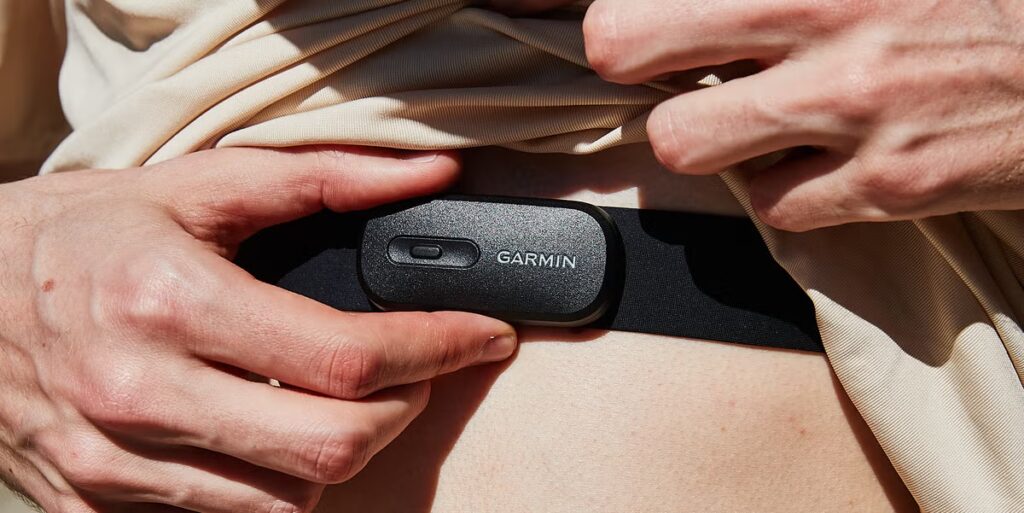
Utilizing a heart rate monitor (HRM) during runs is one of the most effective strategies to enhance training, whether you’re a seasoned marathoner or simply aiming to exercise more purposefully. As a runner, I recognize the significance of my heart rate, yet I am not fully versed in leveraging it as a training tool. To gain better insights, I consulted an expert about its importance and how to effectively utilize this data.
According to exercise physiologist and running coach Alyssa Lombardi, “Monitoring your heart rate while training can be a great tool to help you understand how hard your body is working. It’s important for a balanced training program to have lots of easy recovery days where your heart rate is low, balanced by some harder intensity workouts where your heart rate is high.” By understanding and utilizing heart-rate zones—from zone 1 (very light) to zone 5 (maximum effort)—athletes can tailor their training for improved performance, endurance, and recovery.
While zone 2 running garners much attention as the key to building endurance and facilitating recovery, Lombardi stresses that “all zones have their place in a training program.” She also adds an important caveat: “As an exercise physiologist I can understand the benefits of heart rate training but when I am coaching my athletes I do not have them follow heart rate based training to a T because your heart rate can vary so much day to day.” Lombardi explains that factors such as heat, hydration, environment, and medications can influence heart rate. “It is a great tool to have but I never have my athletes follow that 100 percent.”
This nuanced perspective is essential—HRMs are invaluable assets, but their data must be interpreted within context. Each athlete reacts differently, and some exceptionally fit runners may exhibit higher heart rates at lower intensities simply because their bodies have adapted to efficiently handle greater workloads.
As a side note, many of these devices are HSA/FSA eligible, potentially minimizing out-of-pocket costs. Just remember to confirm your eligibility and save those receipts.
Best heart rate monitors
Here are some of the top heart rate monitors available, each catering to different needs and preferences.
- Best Overall: Polar H10
- Best Value: PowrLabs HRM
- Best Complete System: Garmin HRM
- Best Comprehensive Metrics: Whoop 5.0
- Best for Women: Garmin HRM Fit
- Best Ring: Oura Ring 5
- Best Watch: Apple Watch Series 12
🏃♀️ Meet the expert: Alyssa Lombardi
Alyssa Lombardi is a certified personal trainer, running coach, and clinical exercise physiologist with over six years of experience. A former collegiate runner with a master’s degree in exercise science, she coaches athletes of varying abilities through her business, Run Fit With Me. Lombardi prioritizes personalized training, injury prevention, and strength training, integrating evidence-based science with practical experience to assist runners in improving speed, maintaining health, and reaching their objectives.
Full reviews
The Polar H10 is recognized as the best overall heart rate monitor due to its unmatched accuracy and comfort. Utilizing ECG technology, it provides precise data, making it a preferred choice among serious athletes. The soft, non-slip strap comes in various sizes, but women should be aware that it may fit awkwardly with some supportive sports bras—though it works well under lower-cut running tank tops. Men with chest hair have reported slight pulling sensations, yet most find it secure once fitted properly. With long battery life, waterproofing up to 30 meters, dual Bluetooth connectivity, and onboard memory, it serves as a dependable companion for all training styles.
The Powr Labs Chest Heart Rate Monitor delivers solid performance at a fraction of the cost of high-end brands, making it an excellent budget-friendly choice. The strap is comfortable and adjustable, although the sensor is somewhat bulky. Its dual ANT+ and Bluetooth connectivity functioned seamlessly with my Garmin and smartphone apps.
While water-resistant, I recommend avoiding extended swimming sessions. It reliably tracks heart rate across various workouts, from running to CrossFit. The strap fits well on my body, but may feel either too tight or loose for others based on individual shape. Overall, it’s a dependable, straightforward monitor that effectively fulfills its purpose without straining your budget, especially if this is your initial venture into heart rate training.
If you own a Forerunner 570 or newer, you’ll know that some advanced metrics, such as cadence and step speed loss, necessitate a heart rate monitor for accurate measurement. This HRM is not only the best for that purpose but also ranks among the best we tested overall. It’s incredibly comfortable, highly accurate, and syncs effortlessly with any Garmin watch; it’s also compatible with non-Garmin devices. Are you an Apple Watch user? Perfect. You can connect it. Don’t run with a watch? Well, how dare you. But it still works if you link it to your phone instead. (You’re a rebel. I don’t understand it, but I appreciate it.)
However, I wish it came in more and extended sizes. Honestly, if you’re broad through the lats and pecs, it might not fit, which is a common issue with chest straps. Nonetheless, for the majority of runners, this is a cost-effective, comfortable, and feature-rich option that integrates you into Garmin’s ecosystem. Welcome to the club.
The Coros Heart Rate Monitor is my preferred choice when I seek accurate tracking without the hassle of a chest strap. The soft, stretchy fabric band comfortably wraps around my upper arm—no digging or slipping—and accommodates a broad range of arm sizes. I hardly notice it during long runs, and it never gets tangled with my tops. The optical sensor tends to remain steady most of the time, though it may experience slight lag during sudden sprints. It is somewhat slower than other HRMs I tested, by a few seconds. This lagging issue isn’t exclusive to Coros, but it is more pronounced here.
Battery life is commendable, lasting up to 38 hours, and Bluetooth syncing is fast; however, the connection range could be better—you’ll need to keep your watch or phone fairly close. I’ve also found it can become a bit itchy once I start sweating heavily, so a quick rinse after a run is essential. Still, for comfort, ease of use, and eliminating the chest strap, it’s a win in my opinion.
The Whoop Peak is an intriguing wearable device that offers comprehensive health and fitness insights—monitoring not just heart rate, but also recovery, sleep quality, strain, and more. I appreciate how all this data combines to indicate precisely when to exert more effort and when to take a break. I tend to overload myself, juggling marathon training, a book deadline, and a demanding job. This might be beneficial for my AuDHD brain, but it can also be hard on my body. The Whoop helps me recognize when I’m pushing too hard, as my recovery metrics indicate that.
The only significant drawback of this device? You must refer to your phone for all statistics, since the band lacks a display.
Although you pay for a monthly membership to access the complete range of features, the first year is included, making it easier to justify. It doesn’t alert you as frequently as the Oura ring or a Garmin device regarding your habits, but it offers a subtler approach to suggesting that “you’re overdoing it.”
The Garmin HRM-Fit has entirely transformed my perception of heart rate straps. Rather than wrapping around my chest like traditional bands (which often clash with my sports bra during every run), it clips directly onto the underband of a medium- or high-support bra. There’s no chafing or slipping—just accurate tracking that feels nearly invisible once I start moving.
It took a moment to learn how to position the clips correctly, but now it’s second nature. My heart rate data is precise, and I love that it pairs instantly with my Garmin watch and other devices via Bluetooth or ANT+. The bulky clips are visible under fitted tops, so it’s not entirely discreet, but the yearlong battery life compensates for that. For me, it delivers comfort, accuracy, and freedom—all in one package.
I am quite impressed with the enhancements on the Oura Ring 5. Firstly, it’s significantly slimmer and lighter than previous versions, and it also resists scratching more effectively. However, the most crucial aspect is its functionality.
This accurate HRM captures activities effortlessly, sometimes even too readily, as it can mistakenly categorize tasks like vacuuming as “dancing” or cleaning the bathroom as “HIIT.” This might reflect more on my vigorous approach to scrubbing than on any fault of the ring itself.
When I’m running, it tracks my heart rate, oxygen levels, and effort, providing insights on areas for improvement and guidance on achieving those goals, all presented in an intuitive format. One feature I particularly appreciate is its analysis of my cycle, which helps me understand its impact on my workouts. As it turns out, perimenopause is greatly affecting my life, and my previously erratic cycle has become even more unpredictable, making my runs around my period significantly more challenging.
Fortunately, the app offers assistance in this regard. Through the app, users can connect with health professionals or link to their healthcare provider, upload lab results, food diaries, and more, receiving advice tailored to their current goals and circumstances. I recently connected with my primary care physician and my hematologist to assess how my cycle, training, diet, and anemia interact, leading us to develop a treatment plan. Off to the infusion clinic I go! Previously, this process was far more prolonged and cumbersome. Now, my doctors and I can devise concrete plans much more efficiently, which has been a significant relief.
What to consider
When selecting a heart rate monitor, there are several factors to keep in mind to ensure you choose the right device for your needs.
Sizing issues
Many standard heart rate monitors—particularly chest straps and armbands—present real and frustrating challenges regarding size inclusivity. Limited strap size options often render them too small for larger runners and too large or cumbersome for smaller athletes, impacting comfort, fit, and even accuracy.
For women with larger breasts who require more supportive bras, chest straps can be particularly problematic. Supportive or high-compression bras may push the strap down, create pressure points, or shift, leading to discomfort, chafing, or inconsistent readings. When shopping for a heart rate monitor, it’s crucial to consider not only strap length and adjustability but also how the design interacts with your body type and workout attire to ensure both comfort and reliable data.
FAQs
How accurate are wrist-based HRMs compared to chest straps? Wrist-based optical sensors have improved significantly in recent years—adequate for most users—but chest straps remain superior during activities with abrupt heart rate spikes or considerable wrist movement.
Do I need a subscription for my HRM? Most HRMs do not require a subscription; however, some, such as Whoop or Oura, charge a monthly fee for access to their full analytics and insights. It’s worth considering that subscription cost when budgeting.
Can heart rate monitors detect health issues? HRMs are not medical devices, but trends in your heart rate, recovery, or heart rhythm could indicate changes worth discussing with your healthcare provider. Certain devices, like the Apple Watch, even feature FDA-approved ECG apps to record heart rhythm data.