
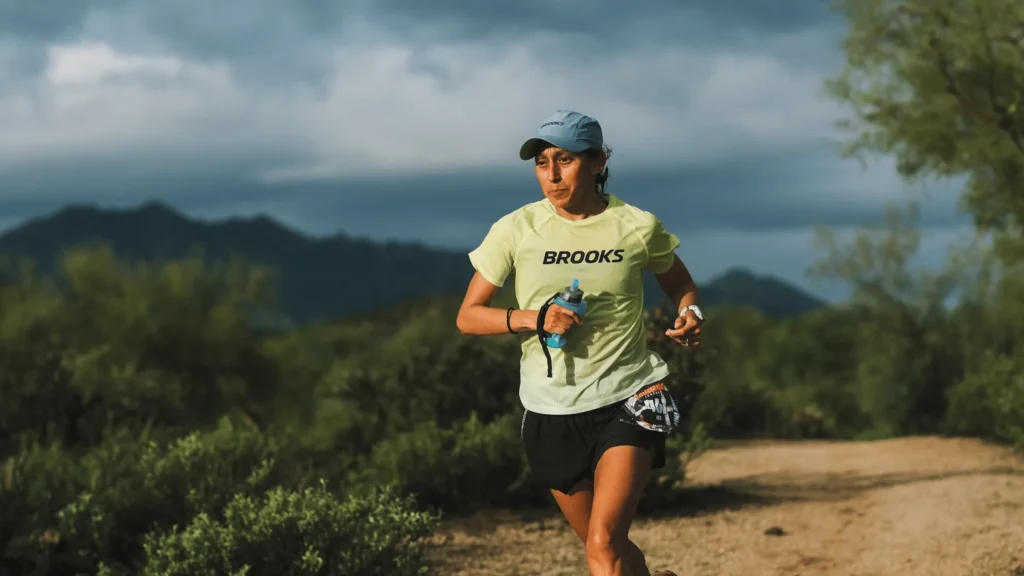
On October 31, outside Fountain Hills, Arizona, Andy Cochrane and Nick Danielson were present to capture Des Linden’s inaugural 100-mile race at the Javelina Jundred. They witnessed her remarkable performance during the first 60 miles, where she led at a pace that threatened the course record, ultimately pushing through the final 40 miles to secure a ninth-place finish. Following the race, they engaged with Linden to uncover her key takeaways and her eagerness to return.
Despite returning to Javelina Jundred “Just like when I started marathons,” five minutes ahead of schedule and in first place, concerns lingered. Having followed her for the last half mile with the camera rolling, it was evident that her leg was cramping. Having completed 60 miles at a pace aiming for the course record, she still had a daunting 40 miles ahead—challenging without a fully functioning lower body. Linden took a moment to discuss her situation with her crew, deciding on a shoe change, increasing her electrolytes, and leaving the rest to chance. Before detailing her race’s conclusion, it’s essential to provide some context.
Being a freelance filmmaker is akin to being a mercenary: one moment, the year seems empty, and the next, you’re loading up a rental van and navigating through the Southwest amid a historic October storm to get to your next assignment. This was precisely the experience of my business partner Nick and me as we received the call to chronicle Des Linden’s first 100-mile adventure at the Javelina Jundred on October 31.
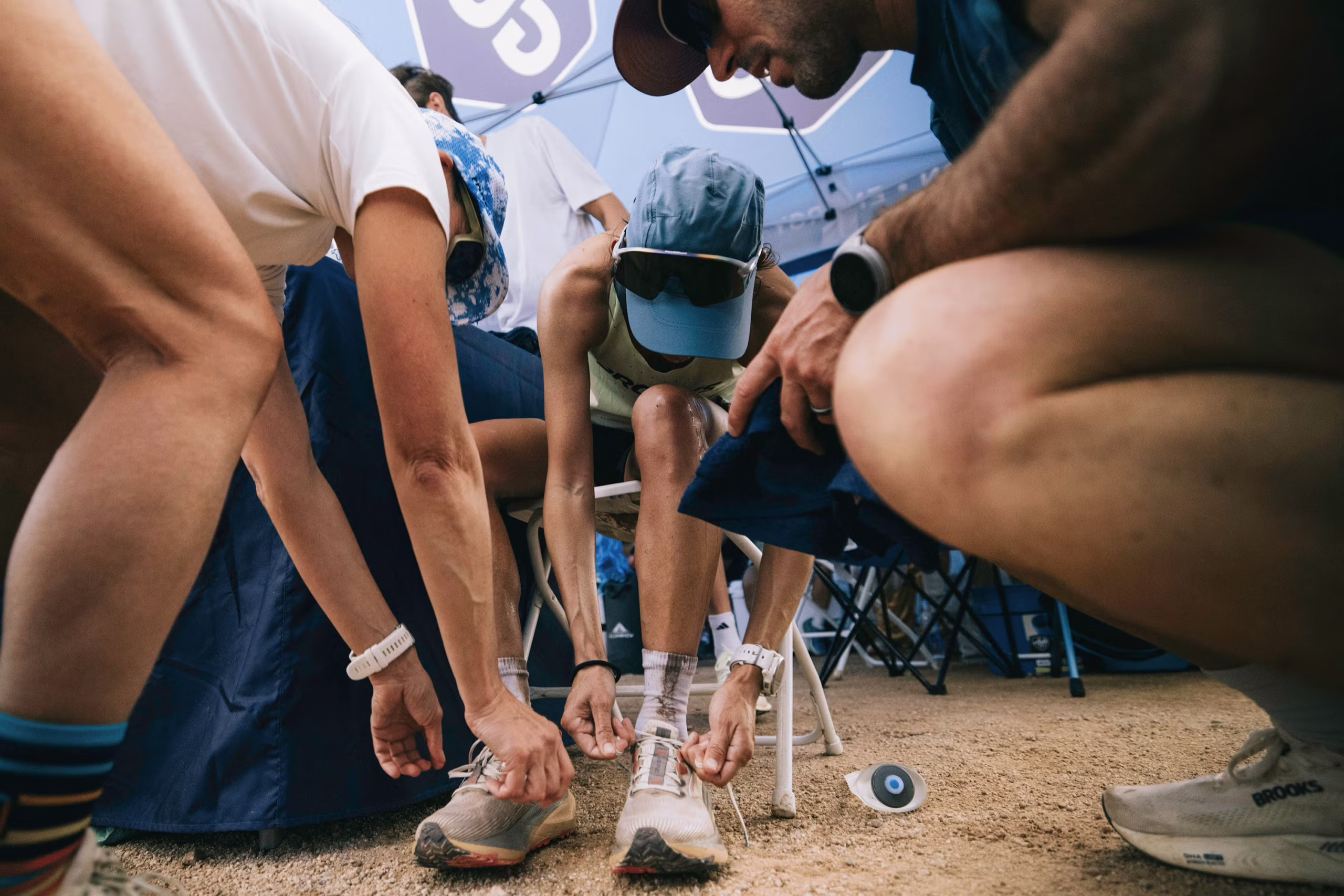
Everything was going smoothly for Des Linden at the Javelina Jundred on October 31—until it wasn’t. (Photo: Andy Cochrane)
After landing in Salt Lake City, we collected a camper van from Roadsurfer, stowed our bags, and headed south along I-15. A brief detour to Moab for a 50K race of our own was followed by four days spent dodging floods and assessing which desert routes were passable after the recent heavy rains—an experience that foreshadowed the race itself.
In our previous three encounters with this event, it had served as a joyful capstone to the season, a reward for completing our race coverage for the year, where the logistical burdens of filming were lifted. Unlike the need to chase athletes through the Sierra Nevada at the Western States 100 or around the heavily glaciated massif at UTMB, the athletes at Javelina run in circles that return to you. Specifically, five laps. Adding to the festive atmosphere, Javelina is typically a massive Halloween celebration, with participants and spectators donning costumes under the warm desert sun.
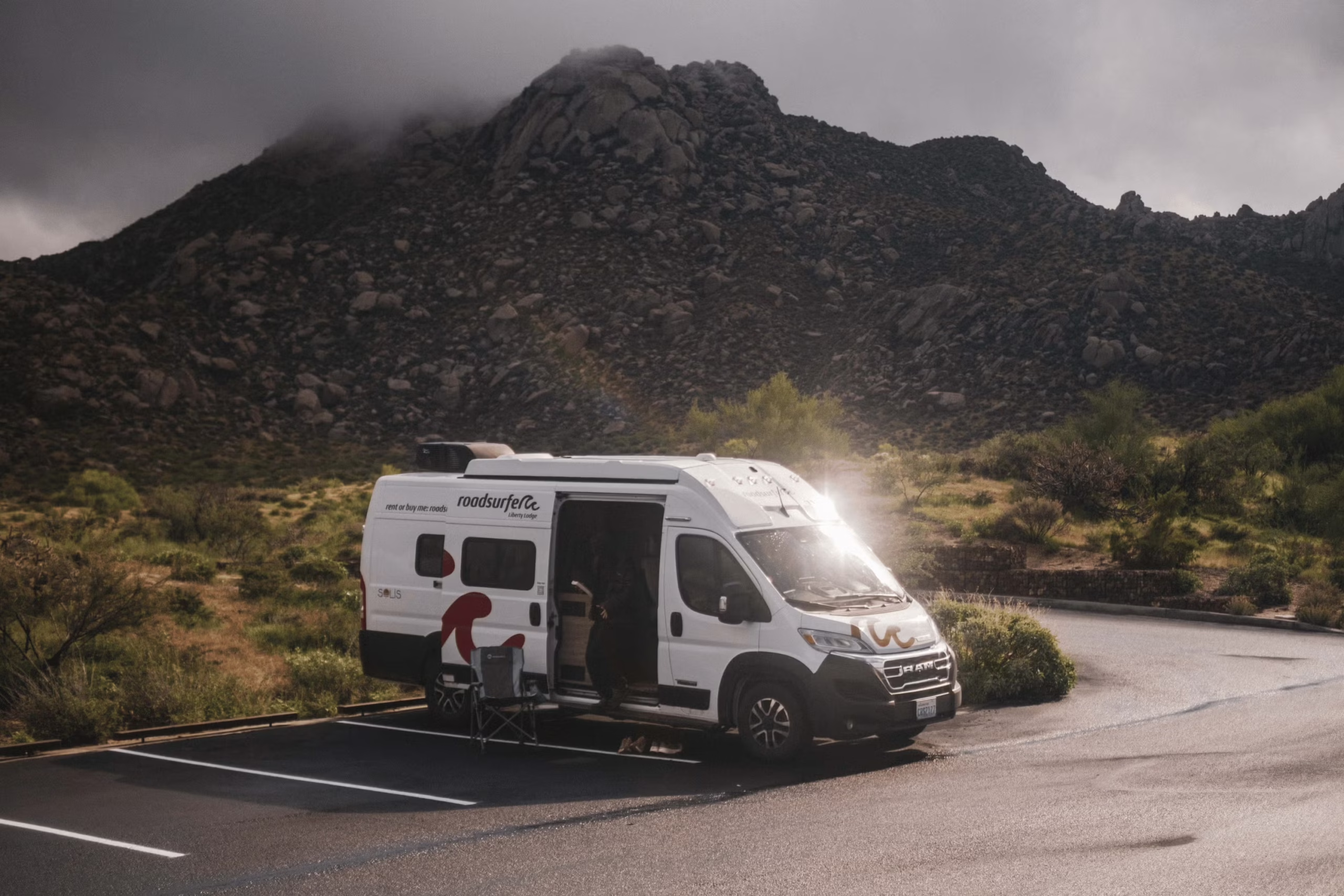
Authors and photographers Andy Cochrane and Nick Danielson traveled in a camper van to document Des Linden’s 100-mile debut. (Photo: Andy Cochrane)
This year, however, was markedly different. The relentless downpours in the 24 hours leading up to the race saturated the course. Though the rain ceased just before the race began, by its conclusion, over two more inches of rainfall had occurred. This was not what one typically expects from an event in the arid Sonoran Desert outside Phoenix, Arizona, but that’s part of the allure of ultrarunning.
We endeavored to keep our cameras dry and our bodies warm as we shadowed Linden during her third ultra—fourth, if one includes her road 50K world record. Despite her impressive road running achievements, Linden was quick to acknowledge her relative inexperience with trails and ultras, expressing excitement about her ongoing learning journey. The initial three laps at Javelina were nearly flawless. However, soon after her body began to falter, the struggle to reach the finish line commenced. At one point, she halted for nearly an hour, sitting and stretching until her legs finally loosened and allowed her to move again. Ultimately, Linden completed her debut 100-miler as the ninth woman, finishing in 16:58:01, about three hours behind the winner, Heather Jackson. We spoke with her the day after the race to discover her most significant lessons from the experience.

The 2026 Javelina Jundred was unlike your typical Burning Man-meets-Halloween-meets-ultrarunning festival in the desert. (Photo: Andy Cochrane)
1. Respect the distance
Linden’s primary insight from the Javelina experience is the necessity of treating 100-mile races—regardless of the course, weather, or situation—with immense humility. These races demand a great deal from both the mind and body and represent a completely distinct style of racing. “I learned that if you’re cavalier with how you race it, you’ll pay the price at some point.” Linden remarked, “The fueling game has changed the sport,”
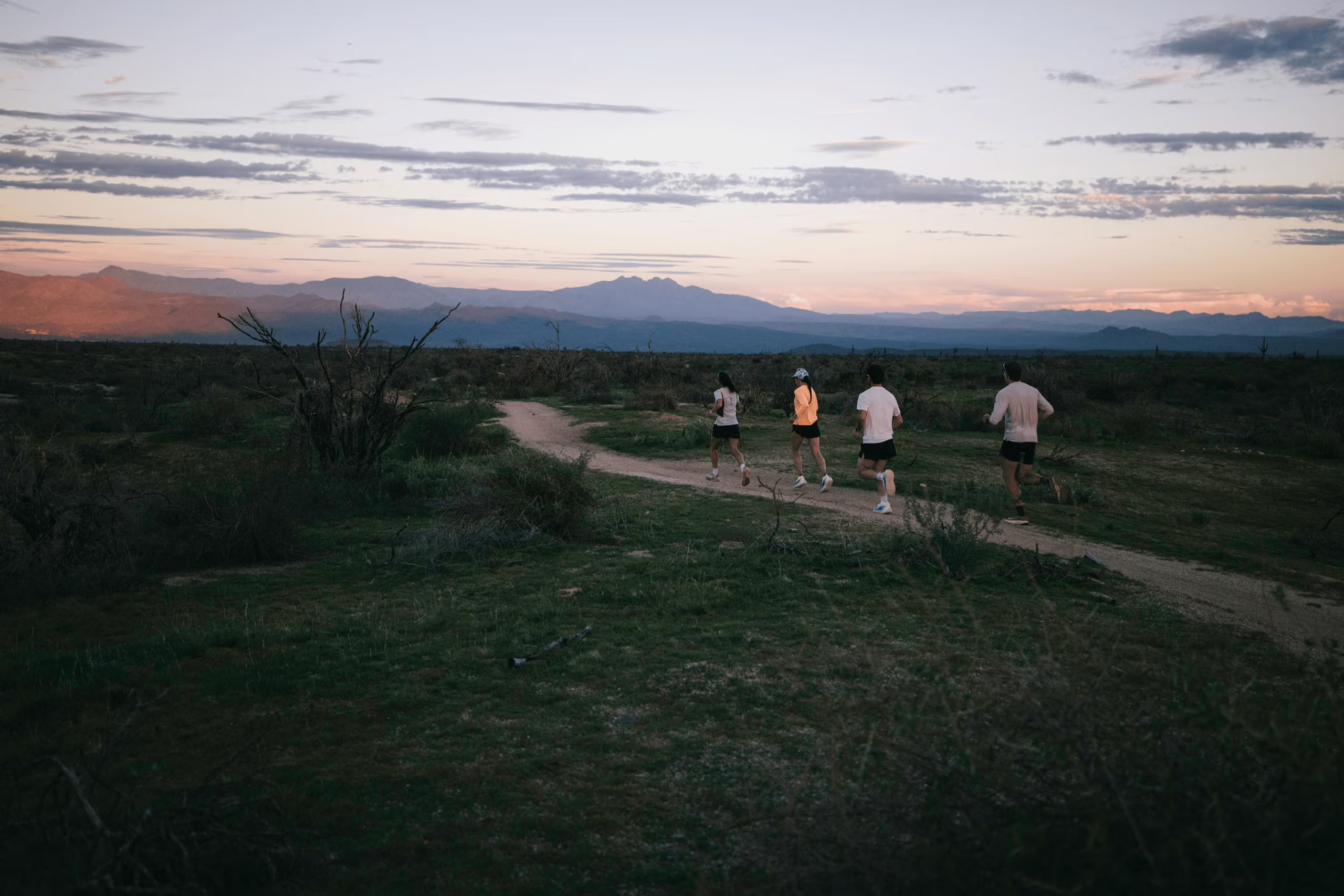
Des Linden entered survival mode with pacer Magda Boulet during the second-to-last lap. (Photo: Andy Cochrane)
2. Always listen to your pacer
Linden exhibited patience in her first 20-mile lap, maintaining a few minutes behind the leaders. Feeling strong, she accelerated during the next two laps, overtaking all the women ahead of her to take the lead around the midpoint. By the end of the third loop at mile 60, she had built a six-minute lead over second place, but her legs were beginning to cramp.
As the fourth lap began, survival became the primary objective, and the best strategy was to heed her pacer, Magda Boulet. Fortunately, no one is better suited for this role than Boulet, a fellow U.S. Olympian in the marathon, a Western States champion, and president of GU Energy Labs. She provided encouragement, ensured Linden maintained her nutrition, and supported her through the fluctuating challenges.
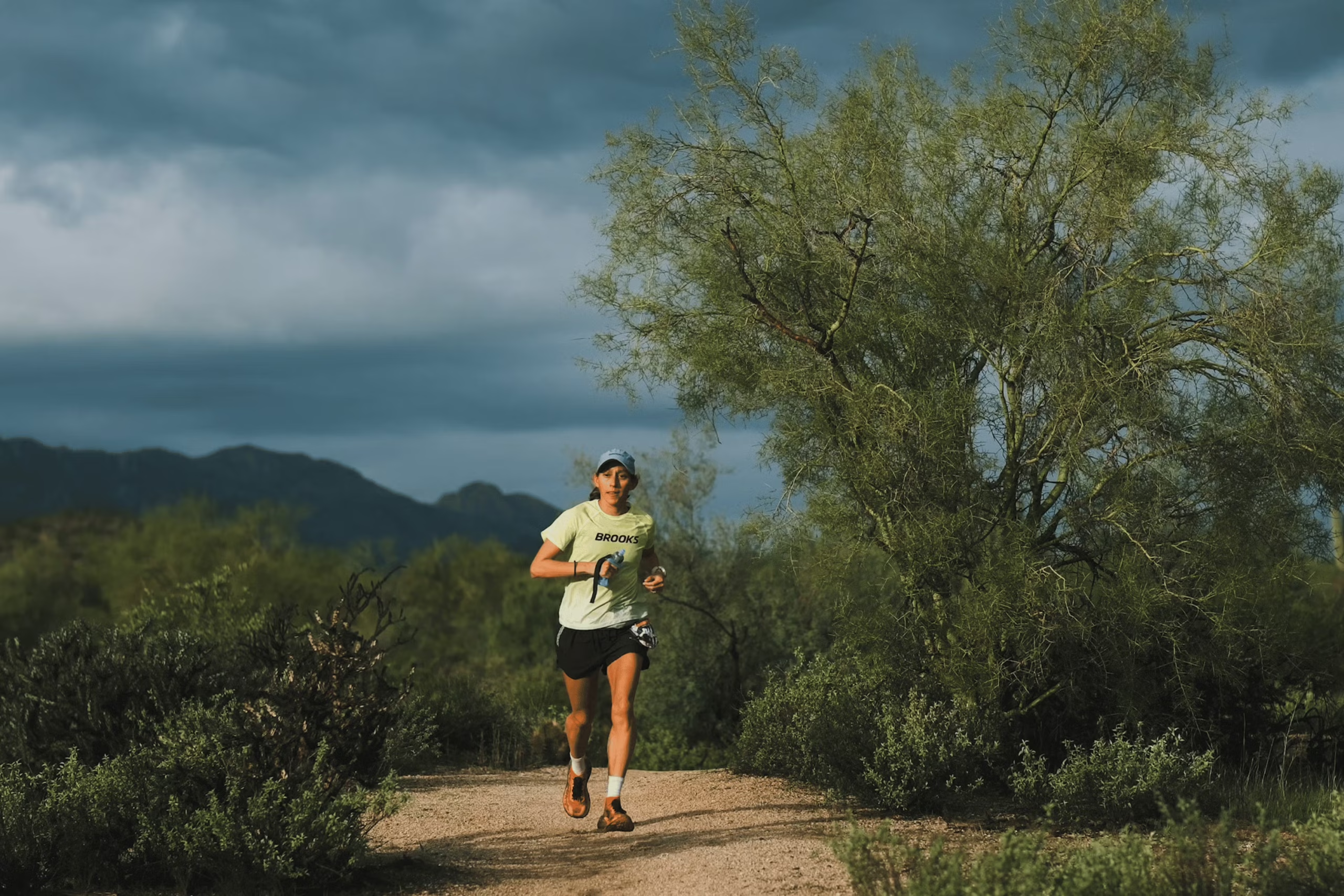
Daytime temperatures soared to nearly 80 degrees Fahrenheit, coupled with 100% humidity. (Photo: Nick Danielson)
3. Fuel early and fuel often
A significant challenge for Linden in transitioning from road racing to trails and from marathons to ultras is understanding the volume of fuel required during a race—and the difficulty of catching up if she falls behind. At Javelina, she consumed most of her calories and carbohydrates through fluids, drinking three half-liter (500 mL) bottles each lap. This fueling strategy was tailored for the typical heat of Javelina, but it still proved effective, as daytime temperatures neared 80 degrees Fahrenheit amidst 100% humidity.
Unfortunately, this was insufficient to prevent cramping in her lower body around mile 60, which necessitated frequent stops for stretching during the fourth lap. This setback cost her the lead and eliminated her chance of winning. “You see it on the roads, but especially here. It’s something I will keep working on, probably forever.” Linden noted. “You need to know when to be tough and when it’s enough,”
4. Prepare for anything—even flooding in the desert
Expecting the Javelina to be hot and dry like previous years, Linden packed accordingly, focusing on cooling strategies and hydration for the heat. She anticipated well-maintained trails and intense sun, but the weather had other ideas. The heavy rainfall forced Linden and her crew to scramble to procure essential gear, including a raincoat. Moreover, due to the extended duration of lap four, she completed the last few miles after sunset without a headlamp.
In the future, she plans to prepare for worst-case scenarios while also recognizing when to withdraw. “If I had to do another lap, I would have been on the edge of hypothermia and the trails were so, so slippery. There is nothing wrong with saving it for another day, but also great value in staying tough.” Linden stated. “The first three or even three-and-a-half laps are transportation,”
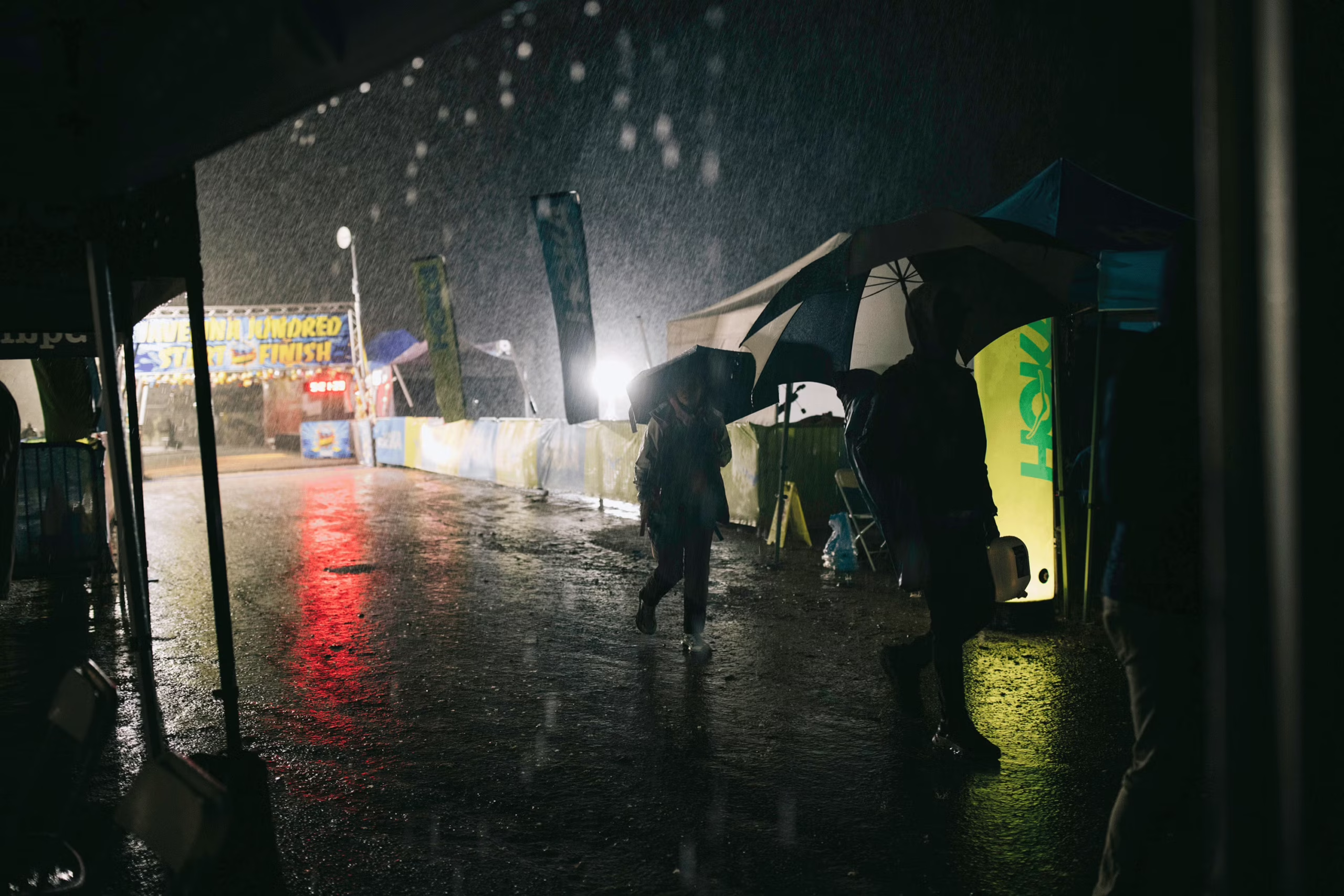
The Javelina Jundred served as a powerful reminder to be ready for anything during a 100-miler, including flooding in the desert. (Photo: Andy Cochrane)
5. Ultras are 70% transportation, 30% racing
Pacing strategies vary in ultrarunning, but some general principles apply to most runners, particularly someone like Linden, who can finish strong in the latter half if feeling good. Interestingly, this approach mirrors how she used to strategize for marathons. The initial third should be manageable, the middle third focuses on maintaining pace, and the final third is when the competitive aspect intensifies. “the final lap or two is about racing.” Linden explained. “A crew that knows you well, knows the sport well, and knows the emotional ups and downs of 100 miles is a real difference maker,”
6. The right crew is everything
When Linden faced challenges during the final two laps, she relied on her crew for support to reach the finish line. After a lap with Boulet, she switched to her husband Ryan as her pacer. He is known for his positivity and energy, and his encouragement, combined with a bit of patience, helped her navigate the heavy rain and strong winds in the final 20 miles.
Her primary support at Javelina HQ was Charlie Lawrence, the world record holder for 100K and a close friend. “I was excited to be around everyone all week, so it was good energy going into the race, which is key.” Linden remarked. “I 100% want to come back to Javelina, it feels like unfinished business,”
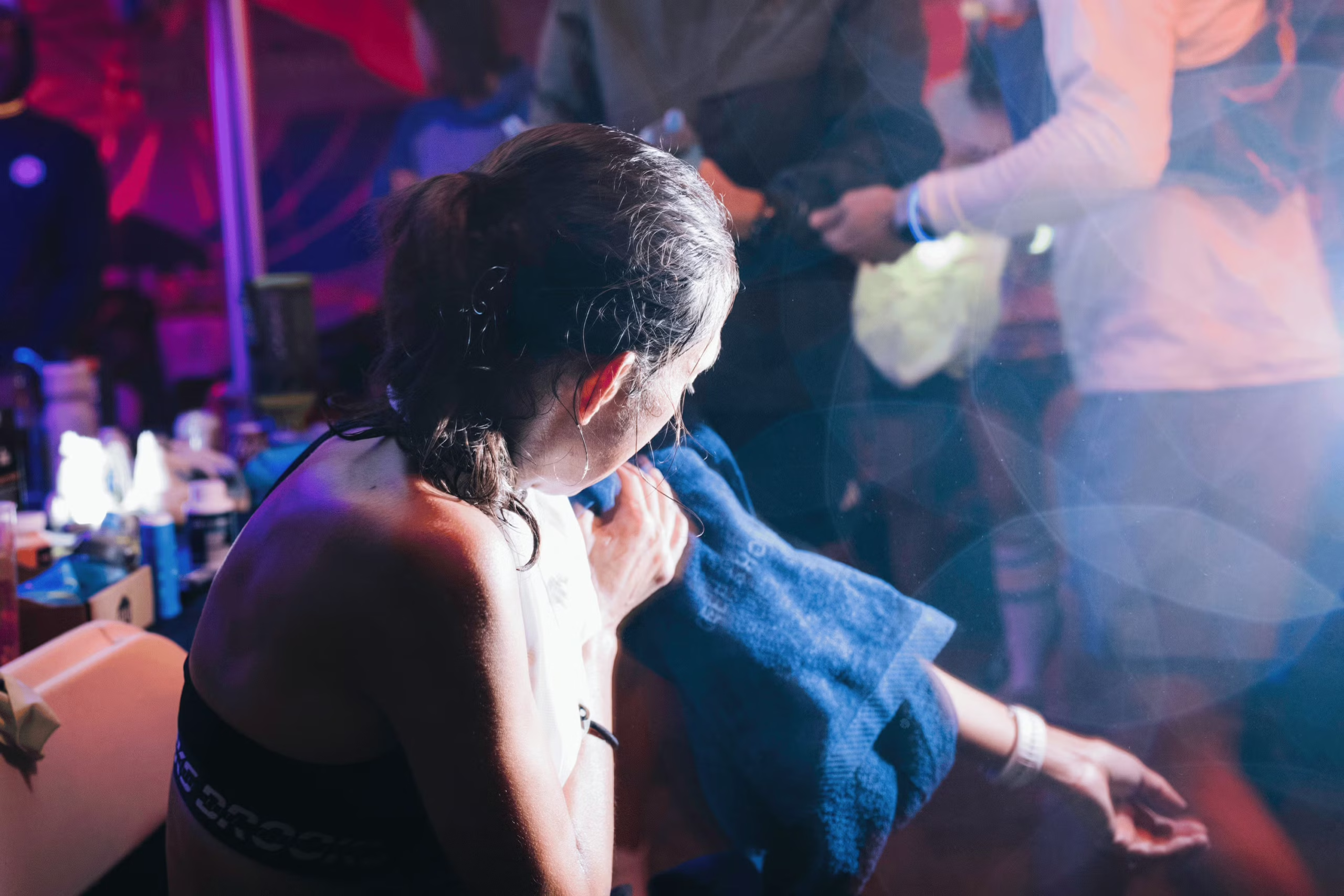
“I didn’t think it would be this clear, but I know I can do so much better here.” Linden stated. (Photo: Andy Cochrane)
7. It’s OK to take a swing and fail—as long as you get up and try again
While Linden is uncertain about her future plans or next year’s race calendar, she left the event with an unexpected sentiment. “I 100% want to come back to Javelina; it feels like unfinished business,” Linden expressed. “I didn’t anticipate it would be this clear, but I know I can perform much better here.”