
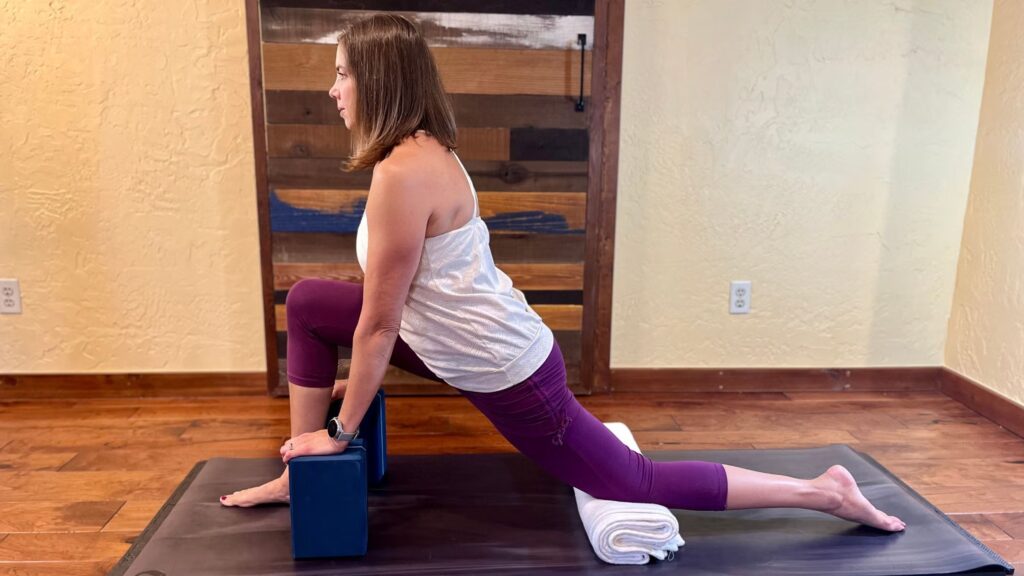
The challenging yin yoga position known as Dragon Pose serves as an effective recovery method for cyclists seeking to enhance hip extension. Due to the repetitive hip flexion involved in cycling, particularly at the peak of the pedal stroke, the main hip flexor muscle, psoas major, can become tight and compressed. This tension can hinder a cyclist’s ability to engage effectively off the bike.
Riding a tri-specific bike often places the torso at a low angle, which offers aerodynamic advantages but demands increased hip flexion. In this aerodynamic posture, the hip flexors, responsible for both flexing the hip and stabilizing the pelvis and lower back, contract frequently without achieving full extension. This may lead to shortened muscles, resulting in lower back pain and stiffness.
For triathletes who spend extended periods hunched over the handlebars during winter indoor training, Dragon Pose is particularly beneficial. It aids in restoring hip extension, preparing athletes for the extended stride required when running after cycling. During the running phase, one leg is consistently loaded as the hip extends behind the body, and Dragon Pose mimics this position, ensuring cyclists are ready to transition smoothly into their running stride.
How to perform Dragon Pose
To effectively execute Dragon Pose, follow these steps to ensure proper alignment and maximize the benefits of the stretch.
- Begin on all fours and step your right foot forward between your hands into a lunge position. Extend your left leg behind you until you feel a stretch in the front of your left thigh and hip. For added comfort, place a blanket underneath your left knee or use a bolster or folded blanket to elevate your back knee off the ground.
- Lower your hands to the floor or use yoga blocks under each hand on either side of your right foot, adjusting the height to feel a stretch in the front of your back hip. Alternatively, you can rest your hands on your right thigh and lift your chest.
- Adjust your right foot further forward for a deeper stretch or closer for less intensity. Relax your shoulders and direct your gaze forward or down to ease neck tension.
- Maintain the pose for three to five minutes. Then, shift your hips back while straightening your front leg, flexing your toes toward you and pulling your heel back. You can also exit the pose by placing your hands on the mat, tucking your toes under, and transitioning into Downward-Facing Dog Pose.
- Switch to the opposite side and hold for an equal duration.
- After completing both sides, lie on your back with your arms and legs extended, taking a few deep breaths.
Optimal timing for Dragon Pose
Incorporate Dragon Pose into your recovery regimen. It is particularly effective after a training ride or race to stretch the hip flexors and enhance hip mobility.
Keep in mind that various bike fit factors influence hip angle and overall comfort. Refer to this guide for five key elements of achieving a proper bike fit, which can facilitate smoother pedaling while keeping your positioning within a comfortable hip flexion range.
Enhancing hip extension can help alleviate feelings of compression while cycling, improve transition ease, and reduce discomfort in the lower back.