
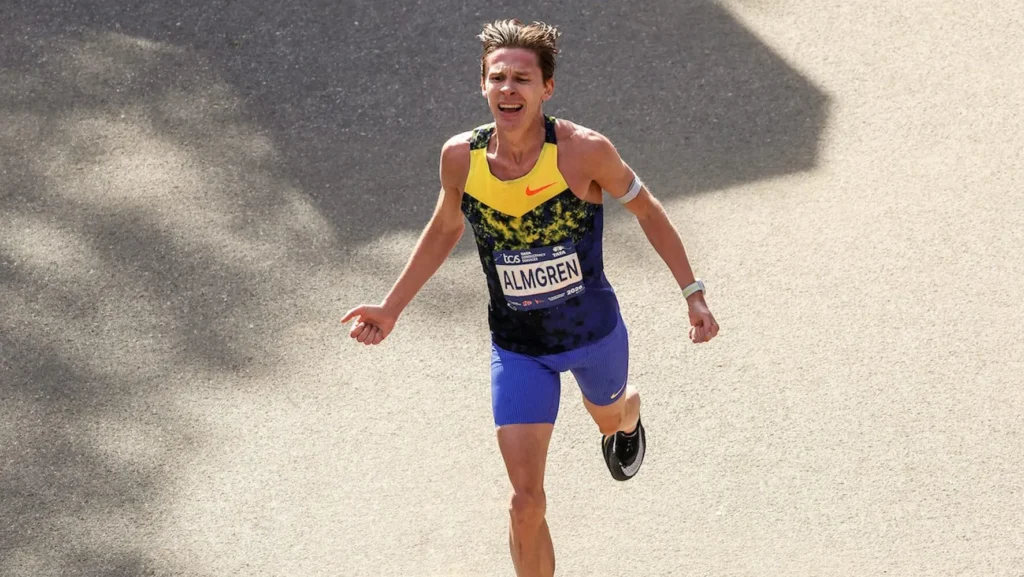
Swedish athleteAndreas Almgrenemerged victorious in the 2026 New York City Marathon, completing the race in 2:06:01, thanks to a meticulously planned fuelling strategy developed over several months of experimentation.
In his preparations, Almgren analyzed how his body metabolized carbohydrates during training and assessed the efficiency with which those carbohydrates were converted into energy. This data informed the creation of an optimal fuelling plan for race day.
Collaborating with sports nutrition company Maurten, Almgren underwent a series of physiological assessments leading up to the marathon, including carbon-13 breath analysis during lengthy training sessions. The objective was to evaluate how much of the carbohydrates consumed could be utilized while running at high intensity.
The study: how much energy do youreallyget from your carbs?
Runners often fixate on the quantity of carbohydrates they ingest during races. However, Almgren and his team sought to determine the actual energy derived from those carbohydrates.
The testing took place during three of Almgren’s long training runs—two in Stockholm and a final 40K run in Flagstaff, Arizona, at an altitude of around 2,100 meters. For the first two runs, Almgren consumed 36 grams of carbohydrates every 15 minutes via Maurten Drink Mix 320. Breath samples were collected throughout the sessions to assess the presence of carbon-13, a naturally occurring, non-radioactive isotope used to track how much of the ingested carbohydrates fueled his performance.
The results revealed a critical insight: simply consuming carbohydrates does not guarantee their immediate availability for energy use. In Almgren’s first long run, the carbohydrates he ingested accounted for merely three percent of his carbohydrate utilization at five kilometers. This percentage increased as he continued running, reaching approximately 29 percent by the 30-kilometer mark.
A similar pattern emerged during his second test; after 52 minutes, the drink mix contributed to 27 percent of his carbohydrate utilization. His peak utilization rate from the drink reached 87 grams per hour. According to Maurten, it took about 60 minutes for the carbohydrates consumed by Almgren to start making a significant contribution to his energy levels.
What does that mean for race-day fuelling?
Starting the fuelling process sooner rather than later is essential. Individual responses may vary, but for Almgren, it took 60 minutes for the carbohydrates to begin effectively contributing to his energy supply.
For his inaugural race in New York City, Almgren consumed a gel containing 25 grams of carbohydrates just two minutes before the start, followed by a drink mix with 80 grams of carbohydrates at each five-kilometer aid station. He also intended to take a caffeinated gel at the 15-kilometer mark, which contained 25 grams of carbohydrates and 100 milligrams of caffeine.
Almgren also practiced the logistical aspects of his carbohydrate strategy. Since the bottles would be positioned at aid stations on the right side of the course and Almgren is left-handed, he trained to collect his drinks using his non-dominant hand while maintaining race pace.